The Gig Economy's Second Chapter
Worker-centric mobile platforms and the redistribution of labor market value
Future of Work
Published May 2024 • Insights WM Capital Team
The first chapter of the gig economy — Gleam App, Lyft, DoorDash, TaskRabbit, Upwork — produced some of the most valuable companies in the history of consumer internet and fundamentally changed how millions of people work and how millions of consumers access services. It also generated significant backlash, as the business models that drove that value creation were built on structural asymmetries between platform owners and the workers whose labor powered those platforms.
The second chapter is being written now, and it looks different. New forces are reshaping the mobile labor market: regulatory pressure for worker protections and classification clarity, a labor market that has given workers more leverage than they have had in decades, consumer preferences that increasingly include worker welfare as a component of the value proposition, and a new generation of founders who have observed the first chapter closely and are building with different priorities from the start.
For investors, the question is whether the second chapter of the gig economy represents an opportunity or primarily a correction to first-chapter excesses. We believe it is both — and that the founders navigating this terrain most thoughtfully are building genuinely new categories of mobile labor market infrastructure with strong long-term economics.
What Went Wrong in Chapter One
To understand the opportunity in the second chapter, it helps to be clear-eyed about the structural problems of the first. The dominant first-chapter gig platforms were designed around a marketplace model that prioritized supply liquidity and consumer demand conversion above all else. Worker welfare, income stability, benefits access, and platform equity were not primary design considerations — they were, at best, secondary concerns, and at worst, costs to be minimized through classification decisions that shifted them entirely onto workers.
The result was a model where workers bore all of the income volatility, benefits cost, and equipment expense of independent contractors, while experiencing many of the restrictions and algorithmic control of employees. The classification "independent contractor" was applied to working arrangements that looked, in substance, much more like employment — with algorithmic management, non-negotiable pay rates, customer allocation policies, and deactivation at the platform's discretion.
The consequences have included sustained regulatory pressure in California, the UK, and the EU; significant litigation over worker classification and benefits obligations; and a worker trust deficit that manifests in high driver and courier turnover on major platforms. All of these costs are ultimately borne by consumers through higher prices and by shareholders through litigation reserves and regulatory compliance costs. The model was not actually as efficient as it appeared during the period of regulatory forbearance that allowed it to scale.
The Second Chapter Model
The most interesting second-chapter labor market platforms share several characteristics that distinguish them from their predecessors:
Worker ownership and equity participation. A growing number of new platforms are structured as worker cooperatives, revenue-sharing models, or platforms with explicit worker equity programs. When workers are stakeholders, not just supply, their incentives align more closely with platform quality and retention, and the adversarial dynamic between platform and worker is reduced. The Up&Go cleaning services platform, structured as a worker-owned cooperative that competes with Handy and TaskRabbit, is an early example of a model that is gaining traction.
Portable benefits and financial services. Rather than denying workers benefits access, second-chapter platforms are building embedded benefits products — portable health insurance, savings programs, income smoothing products — that are designed for the irregular income reality of gig work rather than pretending that reality does not exist. These products are both a recruiting and retention advantage and a source of platform revenue.
Transparent algorithmic management. First-chapter platforms used algorithmic management as a tool of control — workers knew they were being managed by algorithms but had no visibility into how the algorithms worked or how to improve their standing within the system. Second-chapter platforms are building more transparent relationship dynamics, where workers have visibility into how their performance is evaluated, how gig allocation decisions are made, and what they can do to improve their outcomes. This transparency reduces the perceived arbitrariness that drives worker dissatisfaction and churn.
Skilled and specialized labor markets. While the first chapter focused heavily on undifferentiated labor markets — driving, delivery, basic tasks — the second chapter is finding significant opportunity in skilled labor categories where worker differentiation and reputation matter more. Home improvement, skilled trades, specialized care services, professional creative services — these are categories where platform quality is defined by worker quality, and where attracting, retaining, and rewarding the best workers is the primary competitive lever.
The Mobile Layer in Second-Chapter Platforms
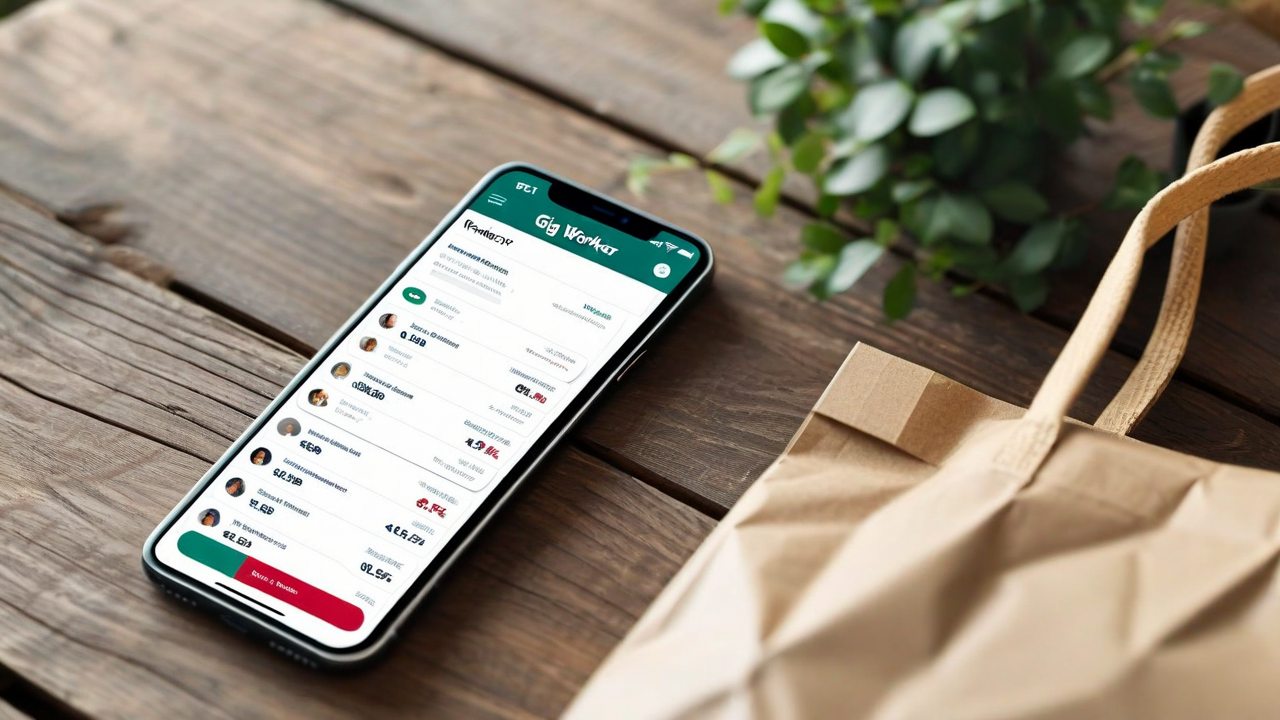
The mobile experience design of second-chapter gig platforms reflects their different priorities. Where first-chapter apps were designed to maximize work acceptance rates and minimize friction for consumers at the potential expense of worker decision-making, second-chapter apps are investing in worker-facing UX that treats the worker as a primary user whose experience determines platform quality.
Worker earnings dashboards that provide genuine transparency into income, fees, and tips. Flexible work scheduling interfaces that support worker autonomy rather than algorithmic demand-matching. Financial management tools integrated directly into the platform app. Community features that connect workers to each other, enabling peer support, collective advocacy, and knowledge sharing. These worker-facing product investments are not just ethically preferable — they are economically rational, because worker satisfaction is the leading indicator of service quality, which is the leading indicator of consumer retention.
The Market Structure Opportunity
The market for mobile labor platform services is enormous and growing. Approximately 60 million Americans do some form of gig or independent work, with similar proportions in most developed economies. The informal labor market in emerging economies — which mobile platforms are only beginning to formalize — dwarfs even these numbers. The addressable market for mobile labor market infrastructure is in the trillions of dollars of labor market value annually.
Capturing even a small share of this market requires solving the trust problem between workers and platforms that first-chapter models damaged. Second-chapter platforms that build genuine trust — through equitable economics, transparent management, meaningful worker voice, and legitimate benefits access — will have structural advantages in worker recruitment, retention, and engagement that translate directly into service quality and consumer retention advantages. The second chapter of the gig economy is being built on better foundations, and the companies getting it right today will be the labor market platforms of the next decade.
Explore our mobile economy thesis at About Insights WM Capital or contact us.